Blood Flow Restriction Therapy (BFR) in Texas
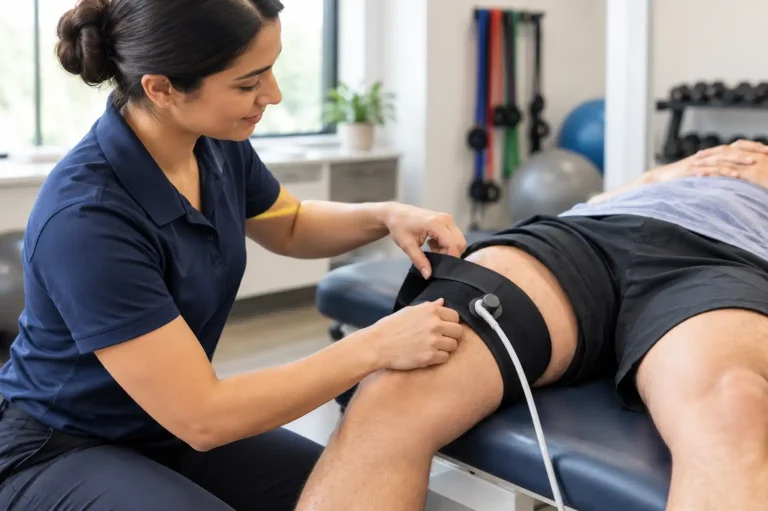
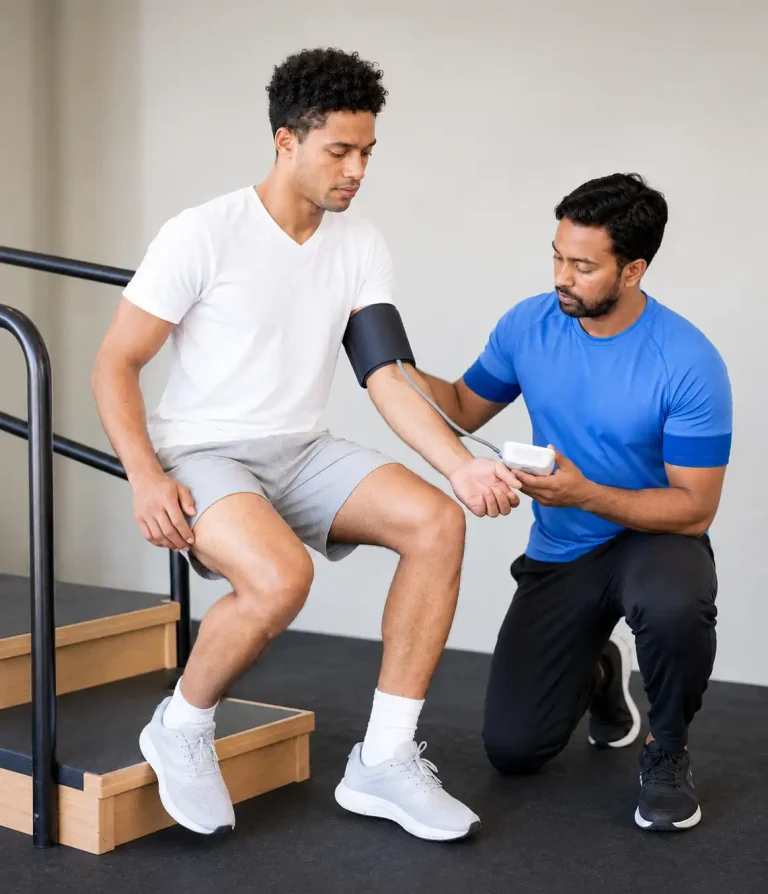
Blood flow restriction therapy uses a pressure cuff on your upper arm or thigh while you do light exercises, so your muscles get stronger without heavy weights.
It’s for people who can’t lift heavy yet — after knee or shoulder surgery, with arthritis or after weeks of muscle loss from an injury.
A licensed physical therapist screens you first, sets the cuff pressure and runs every set — at all eight of our Texas clinics.
No referral needed to start. Most major insurance, PIP and attorney lien or LOP cases accepted.
What Is BFR Training?
BFR training is low-load strength exercise done with a cuff that partly limits blood flowing into a working limb and holds blood from leaving it until the cuff is released. You’ll also hear it called blood flow restriction training, blood flow restriction physical therapy, occlusion training or BFR therapy. When it’s used for rehab in a clinic, it’s usually called blood flow restriction therapy.
With less oxygen getting in, the muscle tires quickly on a light weight, so your body recruits more muscle fibers — the signal for strength and size gains. A 2021 clinical review in the Journal of Athletic Training describes BFR as a way to limit weakness and muscle loss after injury or surgery without overloading healing tissue.
How Blood Flow Restriction Therapy Works in a Session
| What we adjust | Typical range |
|---|---|
| Cuff placement | Top of the working arm or thigh |
| Cuff pressure | 40–80% of your limb occlusion pressure (lower for arms, higher for thighs) |
| Weight | 20–40% of what you could lift once |
| Reps | Often 30, then 15, 15, 15 |
| Rest between sets | 30–60 seconds, cuff stays on |
| How often | 2–3 times a week, commonly for 4–6 weeks |
What we adjust: Cuff placement
What we adjust: Cuff pressure
What we adjust: Weight
What we adjust: Reps
What we adjust: Rest between sets
What we adjust: How often

Blood Flow Restriction Therapy for Knee Rehab
After ACL reconstruction or meniscus surgery
Quad weakness can hang around for years after ACL reconstruction. In research settings, BFR has been started as early as two to three weeks after surgery. We follow your surgeon’s restrictions and bring BFR in when it fits your stage of post-operative rehab.
Knee osteoarthritis
Kneecap pain and patellar tendon pain
Front-of-knee pain tends to flare the moment you load the joint. Studies have reported less pain with BFR in patellofemoral pain and patellar tendinopathy, so we can strengthen the quads without stirring up the knee pain itself.
After knee replacement
Who BFR Therapy Is For — and Who Should Skip It
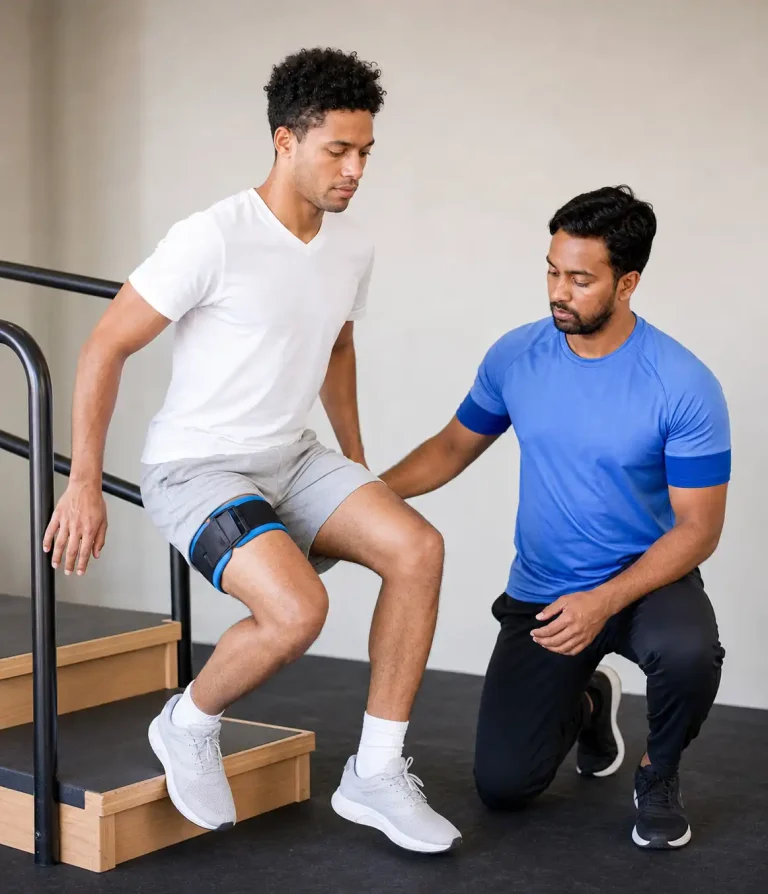
Recovering from knee, shoulder or ankle surgery with lifting limits
Knee or hip arthritis that flares with heavy exercise
Muscle loss after a cast, brace or fracture
Weight-bearing restrictions on one leg
Older adults steadily losing leg strength
Athletes rebuilding before they return to sport
History of DVT or a blood clotting disorder
High blood pressure that isn't controlled
Poor circulation, peripheral vascular disease or varicose veins
Pregnancy
Active cancer, active infection or kidney problems
Diabetes, lymphedema or easy bruising (needs extra review)
Hurt in a car crash and left with one leg noticeably weaker after a fracture or brace? BFR can be part of that plan, and our auto accident injury treatment program covers how the rest of that recovery works.
Your First BFR Visit — What Actually Happens
Screening comes first
Setting your pressure
Progress from visit to visit
Not sure BFR is right for you? Request a free phone consultation with a therapist.
Insurance and Referrals for BFR Therapy
You don’t need a doctor’s referral to start physical therapy with us. We work with most major insurance plans, and we verify your benefits before your first visit. If your injury came from a car accident, PIP and attorney lien or Letter of Protection (LOP) arrangements are accepted. Coming in after surgery? Bring your surgeon’s protocol so we can match it from day one.
Why Patients Choose Advance Physical Therapyfor BFR
Patients choose Advance Physical Therapy for BFR because licensed physical therapists run it, one therapist stays with your case, and there’s a clinic close by across Texas.
Hands-on care, not just a cuff A cuff speeds up strengthening, but stiff joints and scar tissue still need hands-on work. Your plan is customized to your surgery, your joint and your goals, with the aim of getting you there in fewer visits.
The same therapist, start to finish The therapist who screens you follows your case through discharge.
26+ years, eight Texas clinics We’ve served Texas since 1999 and treated 25,000+ patients, and BFR is available at all eight of our clinics.