Concussion Physical Therapy in Texas

Concussion physical therapy treats the neck pain, headaches, dizziness, balance trouble and exercise intolerance that can linger after a concussion.
It’s for people still struggling two weeks or more after a fall, sports hit or car crash — including post-concussion syndrome.
That’s where concussion physical therapy comes in. At Advance Physical Therapy, our physical therapists pinpoint what’s still out of sync and retrain it step by step. It’s active concussion treatment, not more time in a dark room.
How Physical Therapy for Concussion Works
Physical therapy for concussion targets the specific systems that keep symptoms going: the neck, the balance and vision connection, and your tolerance for exercise. That focus matches the American Physical Therapy Association’s clinical practice guideline for concussion, published in 2020. Your plan depends on which of these your evaluation flags.
Neck pain and concussion headache treatment
A jolt hard enough to shake the brain often strains the neck too. Stiff joints and tight muscles there can drive headaches that feel like they come from inside your head. We use manual therapy and targeted exercise to calm the neck down, which often eases the headaches with it
Dizziness, balance and vision
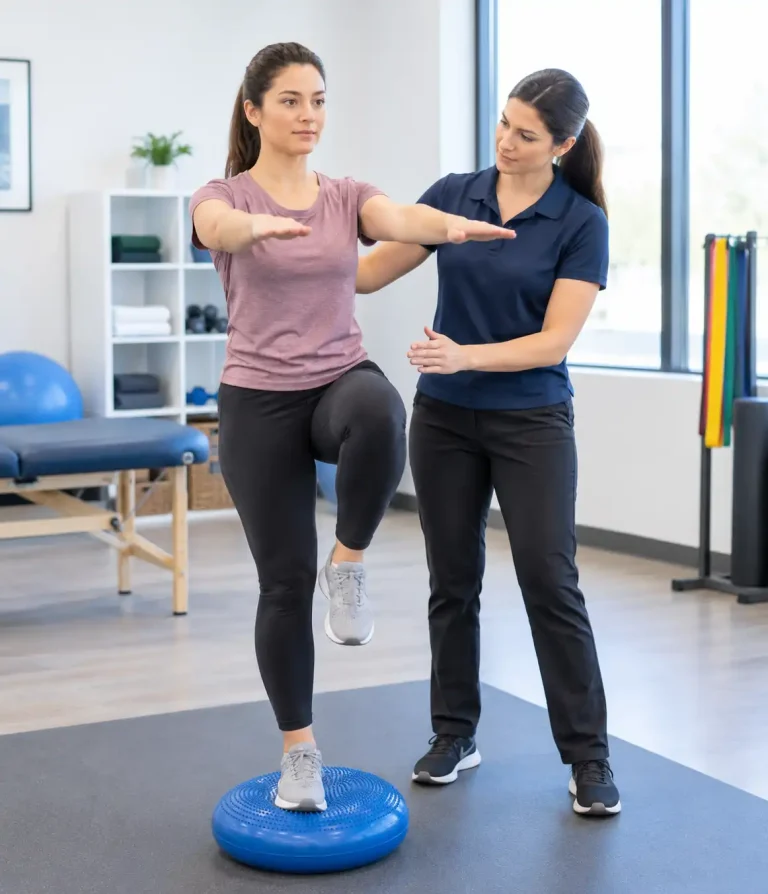
Dizziness after a concussion often comes from the inner ear and eyes not coordinating the way they should. Gaze exercises, balance work and gradual exposure to busy places help retrain that link. If dizziness is the main problem, we fold in vestibular rehabilitation.
Exercise tolerance
Getting back to work, driving and sport
What Is Post-Concussion Syndrome?
Post-concussion syndrome is when concussion symptoms — headaches, dizziness, brain fog, poor sleep, irritability, sensitivity to light or noise — last well past the usual recovery window of a few weeks. Clinicians increasingly call it persistent post-concussion symptoms. Lingering symptoms usually point to one or more systems that still need direct work.
Post-concussion syndrome treatment
Post-concussion syndrome physical therapy isn’t a one-size routine. One patient needs neck work and a graded walking program; another needs vision and balance retraining first. If your symptoms point to something outside physical therapy, such as mood changes, sleep problems or memory issues, we’ll tell you and recommend you follow up with your doctor.
Headaches that build as the day goes on
Feeling off-balance in stores, crowds or traffic
Screens or reading wear you out quickly
Neck stiffness or pain since the injury
Exercise brings symptoms back
Trouble focusing at work or school
Concussion After a Car Accident
If you were hurt in a crash, your concussion care can be part of your broader auto accident injury treatment.
Concussion Recovery: What the Weeks Usually Look Like
| Timeframe | What's typical | What helps |
|---|---|---|
| First 1–3 days | Symptoms are at their worst | Take it easy; short break from work or school, usually no more than 2–3 days (CDC) |
| Days 3–14 | Symptoms start easing | Gradually return to normal activity; if something doesn't worsen symptoms, it's generally OK |
| Beyond 2 weeks | Symptoms still hanging on | Concussion rehab with a physical therapist is a reasonable next step (APTA guideline) |
Timeframe: First 1–3 days
Timeframe: Days 3–14
Timeframe: Beyond 2 weeks
Your First Concussion Physical Therapy Visit
History and danger-sign screening
Testing
Your plan and home program

Insurance and Referrals for Concussion Car
You don’t need a doctor’s referral to start concussion physical therapy with us, and we accept most major insurance plans. We verify your benefits before your first visit.
Why Patients Choose Advance Physical Therapy for Concussion Care
Patients choose us as their concussion clinic because a licensed physical therapist evaluates every case and stays with it through discharge.
26+ years in Texas We’ve served Texas communities since 1999 and treated 25,000+ patients.