

You walk away from a fender bender on a busy Texas highway feeling completely fine. Your car has a few scratches, but your body feels untouched. You go home, go to bed, and carry on with your week. Then, exactly three days later, you wake up feeling like you were hit by a truck. Your neck is stiff, your back aches, and simple movements make you wince.
If this sounds familiar, you are experiencing a very common phenomenon: delayed pain after a motor vehicle crash. It is incredibly common to wonder why your body is suddenly breaking down days after the event. Understanding why this happens and seeking timely car accident injury treatment is the key to preventing long-term physical issues.
The Adrenaline Mask: Why Pain Delays Its Arrival
Right after a collision, your body handles shock by flooding your system with adrenaline and endorphins. This is a natural survival mechanism designed to mask pain so you can get out of danger.
Once the initial stress fades over 24 to 72 hours, your hormone levels return to normal. As the biochemical mask slips away, the actual physical strain becomes obvious. Inflammation, swelling, and muscle micro-tears begin to set in. This is usually the exact moment people start searching for structured car accident treatment because the stiffness becomes too much to handle.
Common Delayed Symptoms You Should Never Ignore
Soft tissue injuries do not show up on basic emergency room X-rays, which only check for broken bones. Here are the main delayed warning signs that require expert attention:
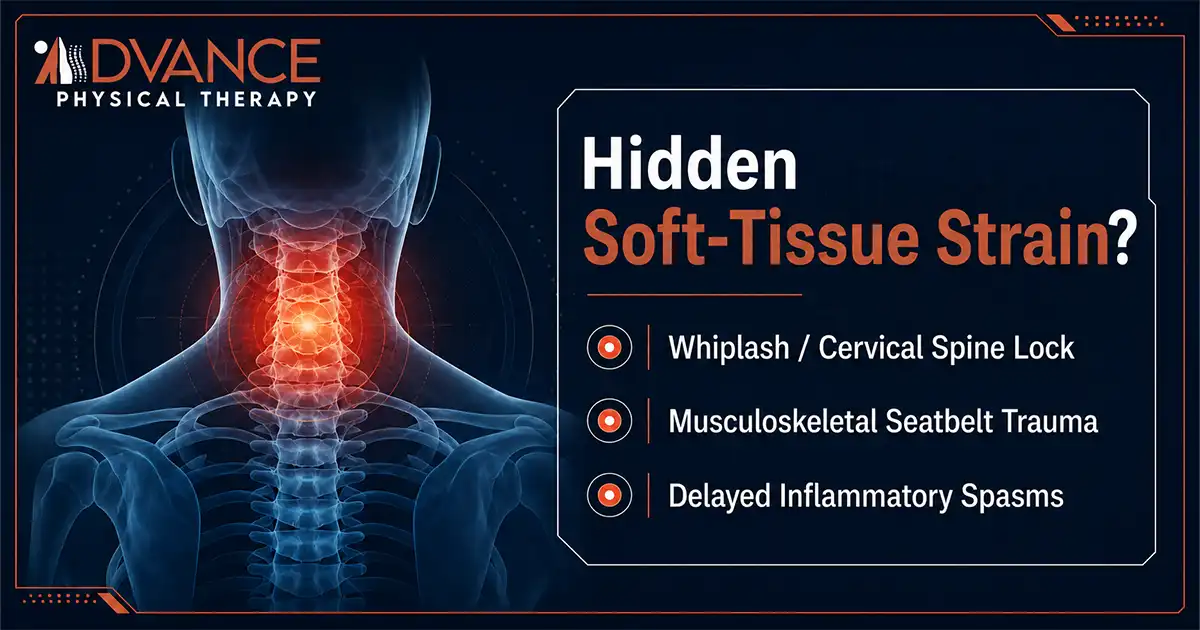
- Whiplash and Neck Stiffness: Your head moves violently forward and backward during an impact. This strains the delicate muscles and ligaments in your cervical spine. If your neck feels locked up a few days later, you likely need targeted whiplash treatment to restore your range of motion.
- Severe Back and Lumbar Strain: The force of a seatbelt holding you in place can cause significant deep tissue damage along your spinal column, leading to intense lower back pain or radiating nerve pain like sciatica.
- Delayed Chest Pain: Many accident victims experience sudden chest pain after a car accident days later. While it can simply be deep muscle bruising from the seatbelt or steering wheel, it is important to have a specialist check if it is musculoskeletal trauma that requires clinical care.
- Headaches and Dizziness: Waking up with a sudden fog, vertigo, or constant headaches days later can point to a minor head impact or a neck injury affecting your equilibrium. These symptoms are best addressed through professional concussion treatment and specialized vestibular rehabilitation.
Why You Shouldn’t Wait to Start Your Recovery
Waiting out the pain and hoping it goes away on its own is the most damaging thing you can do to your body. When soft tissue tears heal without movement, your body builds thick, rigid scar tissue. This scar tissue glues your muscles together, causing permanent stiffness and chronic pain down the road.
Starting specialized car accident physical therapy early breaks up this scar tissue before it forms properly. Moving your joints with the help of clinical experts triggers healthy blood flow, keeps your muscles flexible, and stops long-term chronic pain from setting in. Over 80% of acute injury patients who choose this path feel significantly better in under 8 visits.
Navigating Insurance and Claims in Texas
A very common reason people avoid going to a clinic is the fear of medical bills and insurance disputes. In Texas, you have clear protections to ensure you get the medical attention you need without financial stress:
- Personal Injury Protection (PIP): This is a part of your auto insurance policy that is specifically designed to cover medical expenses immediately following a crash, regardless of who was at fault.
- Letters of Protection (LOP): If there is a dispute or delay regarding your insurance claims, our clinics accept an attorney’s LOP. This legal agreement allows you to receive immediate physical care now, while payment is settled later directly from your claim distribution.
Choosing a dedicated clinical network for your rehab after car accident ensures that the administrative paperwork is handled correctly alongside your actual physical healing.
Start Your Recovery Today—No Referral Needed
Getting immediate medical attention shouldn’t involve jumping through hoops. Under Texas direct access laws, you are legally permitted to walk straight into a clinic to begin your recovery journey without waiting weeks for a general doctor’s referral note.
Frequently Asked Questions
How long after a car accident can you feel sore?
Most people notice soreness within 24 to 72 hours. Some symptoms, like headaches or tingling in the arms, can take a week or more to show up. If new pain appears, get it checked even if you felt fine at the scene.
Is it normal to be sore after a minor car accident?
Yes. A low-speed crash can still snap the head and neck back and forth hard enough to strain muscles and ligaments. The damage to your car doesn’t always match what your body absorbed.
When should I go to the ER instead of physical therapy?
Go to the ER or call 911 for a severe or worsening headache, confusion, loss of consciousness, numbness or weakness, trouble breathing, or chest pain with shortness of breath. Physical therapy is the right next step once serious injuries have been ruled out.
Do I need a referral for car accident physical therapy in Texas?
No referral is needed to start. Texas law allows a qualified physical therapist to evaluate and treat you for up to 10 business days without one. If you need care beyond that, we’ll coordinate with your doctor.