
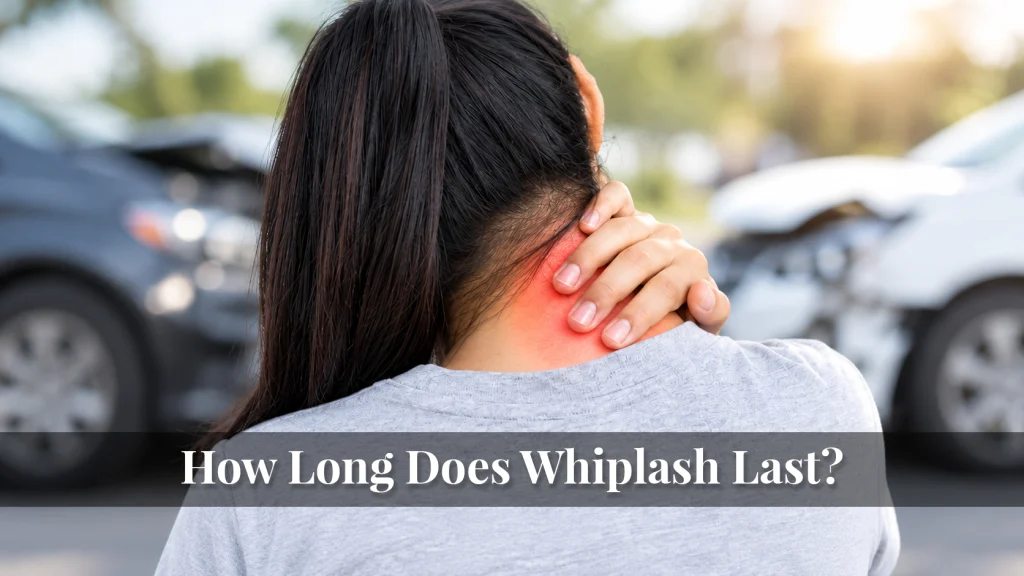
How Long Does Whiplash Last? Recovery Timeline and What Affects It
You’re three days out from a rear-end collision. The neck stiffness that wasn’t there in the ER is suddenly making it hard to turn your head, your sleep is a mess, and at 2 AM you’re searching for the same answer everyone searches for: how long does whiplash last? Most results give you some version of “it depends.” That’s true. But it’s also not very helpful. We’ve been treating whiplash patients at our physical therapy clinic across Texas since 1999, and there’s a much clearer picture we can paint based on what we actually see in clinic every week. How long does whiplash last? Most whiplash lasts 2 to 12 weeks. Mild cases clear in 2 to 4 weeks, moderate cases in 6 to 8 weeks, and severe cases can take 3 months or longer. About 15 to 30% of people develop chronic whiplash lasting beyond 12 weeks — usually when early treatment is skipped. The Honest Answer For most people, whiplash lasts 2 to 12 weeks. Mild cases tend to clear in 2 to 4 weeks. Moderate cases settle in 6 to 8 weeks. The ones that hang on past 12 weeks (what doctors call “chronic whiplash”) affect roughly 15 to 30% of patients, and they’re almost always the people who never got the right care early on. That’s the part nobody mentions in your ER discharge papers. Early treatment is the single biggest factor in how long this sticks around. How Long Does Whiplash Last by Severity? How long whiplash lasts depends heavily on how severe the injury is. Here’s what we typically see, from mild strains to severe soft-tissue damage: Whiplash severity Typical recovery time What it feels like Mild (Grade 1) 2 to 4 weeks Neck pain and stiffness, no major loss of movement Moderate (Grade 2) 6 to 8 weeks Pain plus reduced range of motion and muscle tightness Severe (Grade 3) 3 months or longer Pain with neurological signs — tingling, weakness, numbness Chronic whiplash Beyond 12 weeks (15–30% of cases) Lingering pain the nervous system has adapted around These ranges assume you start proper care early. Severe whiplash recovery time stretches out the longer treatment is delayed, and mild cases that get ignored can still slide into the chronic category. Severity sets the starting point — what you do in the first two weeks decides where you land inside these ranges. The Recovery Timeline (Realistic Version) Week 1: The “It’s Getting Worse” Phase This catches a lot of people off guard. You walked away from the crash feeling sore but okay. By day 2 or 3, the pain ramps up sharply. This is normal. Adrenaline masks the soft tissue damage at the scene, and inflammation peaks around 48 to 72 hours later. You’ll usually feel: Stiff neck, worst in the morning Headaches at the base of the skull Pain turning your head Tightness through the shoulders and upper back Weeks 2 to 4: The “Am I Getting Better?” Phase If you started PT in week one, you’re noticing real improvements by now. Sleep gets easier. You can drive without wincing. If you didn’t start treatment, this is the danger zone. The body begins compensating by tightening surrounding muscles to protect the injured tissues. That tension feels like “I healed but I’m still tight,” and it becomes the foundation for chronic pain later. Weeks 4 to 8: The Recovery Window Most people return to normal in this window IF they’ve been getting hands-on care. Strength returns, stiffness fades, headaches taper off. Most of our patients wrap up active treatment somewhere in here. Beyond 12 Weeks: Chronic Whiplash Territory Pain past three months isn’t healing tissue anymore. It’s a pattern. The nervous system has gotten used to firing pain signals from those areas, and the muscles have rebuilt themselves around the injury. Harder to undo, but still very much treatable. Does Whiplash Get Worse Before It Gets Better? Often, yes — and it’s one of the most common questions we hear. It’s normal for whiplash to feel worse in the first 2 to 3 days than it did right after the crash, because inflammation peaks 48 to 72 hours later and the adrenaline that masked the pain has worn off. That early spike is not a sign the injury is serious on its own. What matters is the direction after that first week: with the right care, the trend should turn toward improvement. Pain that keeps climbing past the first several days is the signal to get evaluated. 5 Factors That Affect How Long Whiplash Lasts How quickly you start treatment. Patients who begin whiplash physical therapy within the first 7 to 14 days recover noticeably faster than those who wait. By far the biggest factor. The severity of the impact. A 15 mph fender-bender heals differently than a 45 mph rear-end at a stoplight. Your age and baseline health. A 28-year-old typically recovers faster than a 58-year-old. Pre-existing neck issues like arthritis stretch the timeline. Whether you keep moving. Resting too much actually slows recovery. Guided, gentle motion stops the stiffness from cementing. Your stress level. Sounds soft, but the research backs it up. High stress keeps muscles braced, which compounds the injury. How Whiplash Physical Therapy Treatment Speeds Recovery A solid whiplash physical therapy treatment plan handles three things at once: pain reduction early, restoring movement in the middle weeks, and rebuilding strength in the final weeks. Our outpatient physical therapy services for whiplash patients include: Hands-on manual therapy to release tight tissue and restore joint motion Specific neck and postural exercises (not generic YouTube stretches) Dry needling for the trigger points that almost always develop in the upper trap and levator scapulae Education on driving, sleeping, and work postures that prevent reinjury A typical patient comes in within the first 10 days post-accident, sees us 2 to 3 times a week for the first month, then tapers to weekly visits as range of motion returns. Most are discharged with a home